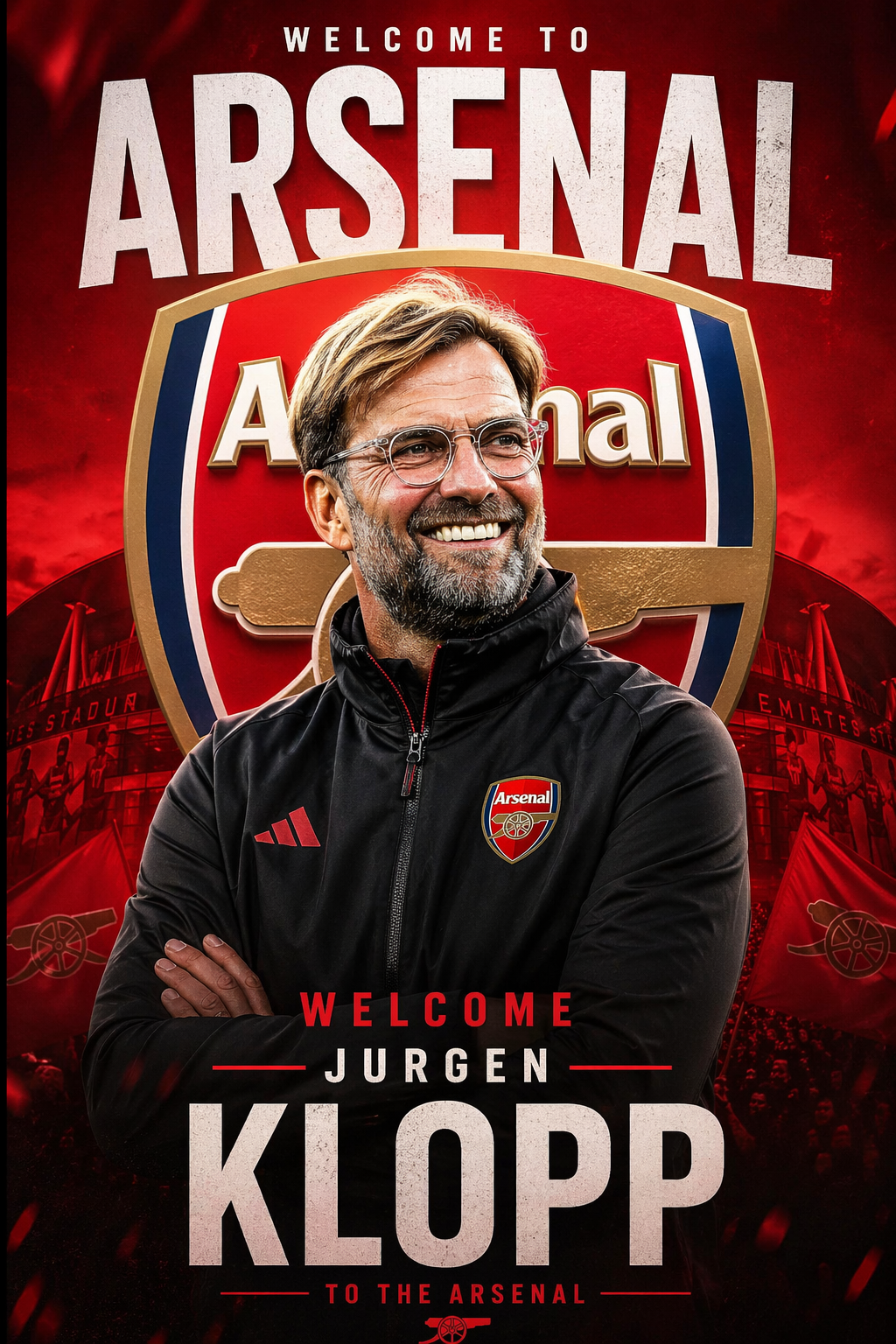
The whispers started long before the season ended.At first, it was just talk on late-night football shows—analysts debating the future of Mikel Arteta at Arsenal. A few poor results, a title race slipping away, and suddenly the pressure grew louder.“If things don’t improve,” one pundit said, “Arsenal might be forced to make a big decision.”Nobody expected just how big.By May, the situation had reached its breaking point. Arsenal finished outside the top four. The board met behind closed doors, and within hours, a short statement was released:Mikel Arteta has left his role as head coach by mutual agreement.Fans were stunned. Arteta had built something promising—but football is ruthless when expectations aren’t met.Then came the second announcement.One name. One shockwave.Jürgen Klopp.Klopp had only recently stepped away from Liverpool, saying he needed rest, time, and distance from the game. But something about Arsenal called him back.In his first press conference at the Emirates Stadium, he smiled that familiar, intense smile.“I said I needed a break,” Klopp admitted. “But football… it doesn’t let you go so easily. And Arsenal—this club—has a story that is not finished.”The reaction was explosive.Some Arsenal fans were thrilled, dreaming of high pressing and emotional football. Others were cautious—could Klopp really fit into Arsenal’s identity?The players, meanwhile, were curious.On his first day at training, Klopp gathered them in a circle.“I don’t promise you easy football,” he said. “I promise you honest football. We run, we fight, we believe—together.”The message was clear.Pre-season felt different.Training sessions were louder, faster, more intense. Klopp demanded energy in every drill. He stopped sessions mid-play, shouting instructions, then laughing moments later.“Again! But this time with heart!” he yelled.Even the quietest players began to change. Confidence grew. Unity followed.The new season began under heavy spotlight.Arsenal’s first match was against a strong rival. The pressure was enormous. Cameras followed Klopp every step, waiting to see if his magic still worked.Within minutes, the answer was obvious.Arsenal pressed high, won the ball aggressively, and attacked with fearless speed. The crowd roared louder than it had in years.By halftime, they were leading.Klopp stood on the sideline, clapping, shouting, alive with energy.Weeks turned into months, and Arsenal climbed the table.There were setbacks—there always are—but something had changed. The team no longer feared failure. They chased the game instead of waiting for it.One evening, after a dramatic comeback win, Klopp stood before the media.“This team,” he said, “is learning to believe again. That is where everything begins.”By the end of the season, Arsenal were back where they belonged—fighting at the very top.And as the Emirates lights shone over a packed stadium, fans sang louder than ever, united by a new chapter.A banner stretched across the stands read:“New Manager. Same Dream.”And at the center of it all stood Jürgen Klopp—smiling, shouting, believing—ready to write the next great story in Arsenal’s history.
Leave a Reply